Growing companies eventually reach a point where basic bookkeeping is no longer enough. Business owners begin asking deeper questions about margins, working capital, forecasting, and operational performance. At that stage, many businesses begin exploring outsourced accounting solutions as an alternative to building a full internal accounting department.
What is Outsourced Accounting?
Outsourced accounting is a model where a company relies on an external professional accounting team to manage core financial operations instead of hiring and managing a full in‑house department.
Depending on the structure, your outsourced team may handle:
- Financial statement preparation
- Month‑end close processes
- Budgeting and forecasting
- Financial analysis and reporting
- Controller oversight
- Accounting system management
- New and better accounting systems or ERP
The objective is not simply recording transactions. Rather, the goal is to produce reliable financial statements and meaningful reporting that management can use to run to business that are based on Generally Accepted Accounting Principals “GAAP”.
For many companies, outsourced accounting solutions provide the structure and financial leadership that bookkeeping alone cannot deliver.
Why Companies Turn to Outsourced Accounting
Most companies start with bookkeeping. But eventually, the business becomes more complex.
Revenue grows, as does inventory, projects, revenue streams and new hires. At that point, management begins needing answers that bookkeeping alone cannot provide.
- What are our real margins by product/service?
- Are we generating enough cash to support growth?
- How accurate are our financial statements?
- Where are we losing money operationally?
Answering these questions requires professional accounting oversight and consistent financial reporting. That’s where outsourced accounting becomes valuable.
4 Signs Your Business May Need Outsourced Accounting
Many companies delay improving their accounting structure longer than they should. They do this because hiring professional accounts is expensive. In the USA, there has been a drop of 30% of students studying accounting. A shortage has made professional accountants very expensive. The result is unclear reporting and limited visibility into financial performance.
Some tell-tale signs include:
1. Financial reports arrive late or are unreliable.
If monthly financials arrive weeks late or change frequently, leadership cannot rely on them to make decisions.
2. The owner is still interpreting the numbers alone.
Many founders review financial reports but lack a dedicated accounting professional to interpret what the numbers actually mean.
3. The company has outgrown bookkeeping.
Bookkeepers perform an important role, but they typically focus on transaction recording and reconciliation. Strategic financial reporting requires deeper accounting expertise and implementation of US GAAP..
4. Hiring a full internal team is too expensive.
A traditional accounting department might require a controller, a senior accountant, and junior accountant. For many mid‑market businesses, that structure can easily exceed $350,000 annually once salaries, benefits, and overhead are included.
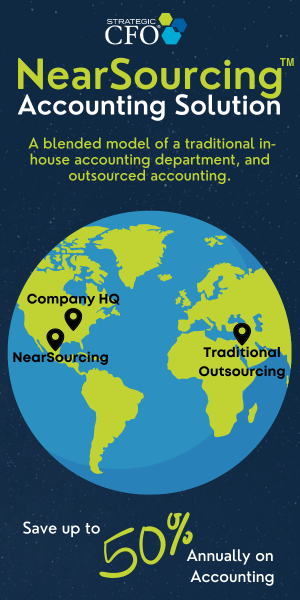
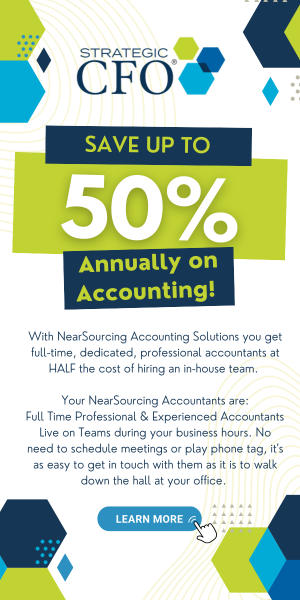
Outsourced accounting solutions often reduce that cost by as much as 40-55% while still providing a structured accounting team and professional oversight.

What a Strong Outsourced Accounting Model Looks Like
Not all outsourcing models are the same. Some providers operate as large offshore processing centers handling many clients at once. While others provide more integrated financial support.
However, a strong outsourced accounting structure should have:
1. A dedicated accounting team
Instead of sharing staff across dozens of companies, the accounting professionals are assigned specifically to your business. This allows them to understand the operations, reporting needs, and internal processes in detail.
2. Professional accounting oversight
A qualified controller or senior accountant should oversee financial reporting to ensure that statements are accurate and consistent with US GAAP.
3. Ongoing financial analysis
Good accounting goes beyond producing statements. It should help management understand margins, working capital, and operational performance.
4. Integration with management
The accounting team should operate as an extension of your leadership group. Communication, regular reviews, collaboration are essential for this model to work effectively.
Is it Time for You to Consider Outsourced Accounting?
Outsourced accounting is often the right move for companies in the following situations:
- Revenue between $10M and $100M
- Rapid growth or operational complexity
- Limited internal accounting leadership
- Need for reliable monthly financial reporting based on US GAAP
- Desire to control overhead while improving financial visibility
At this stage, many companies find that outsourcing the accounting function provides the right balance between cost control and professional financial management.
Learn More About Strategic CFO’s Outsourced Accounting Solutions
Strategic CFO provides accountant outsourcing in your time zone designed specifically for businesses like yours. If you want to understand how our model works in practice, you can learn more about our approach to outsourced accounting solutions here. If you are interested in any of our other offerings, we also provide CFO consulting services such as accounting consulting, corporate restructuring, interim CFO hiring, retained search, M&A advisory and accounting department efficiency.
Or schedule a consultation to discuss whether outsourced accounting is the right structure for your business!